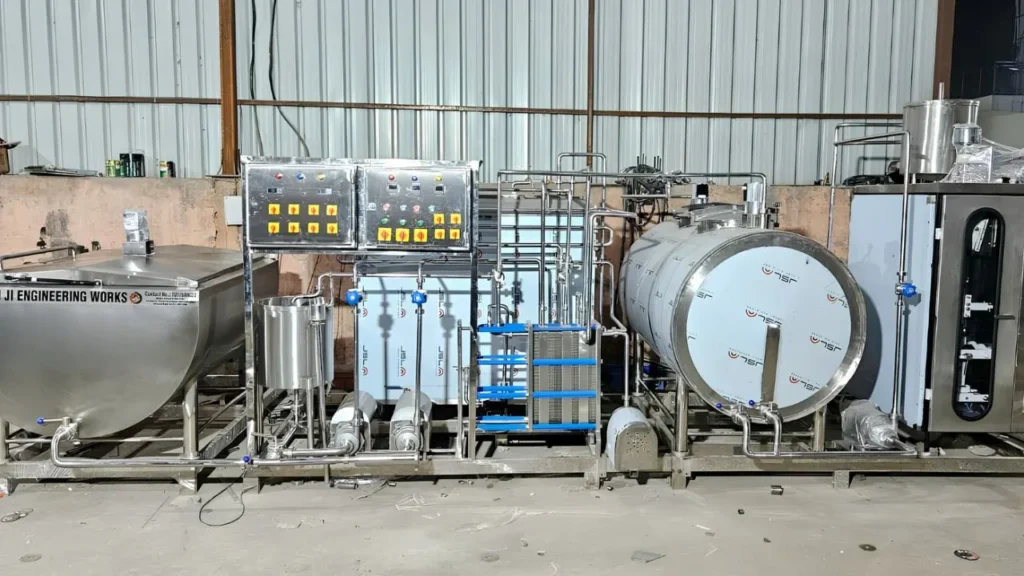
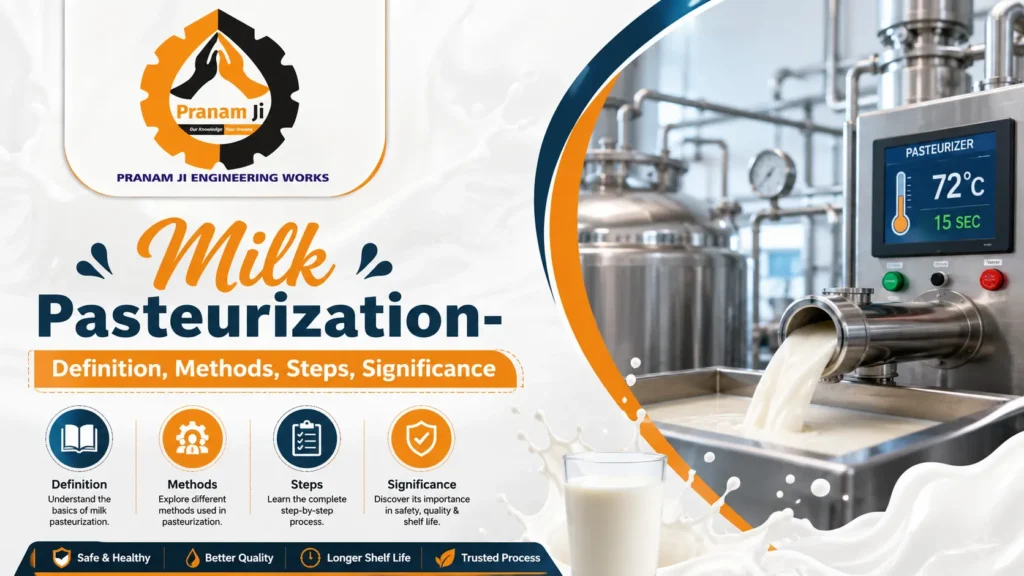
Milk is one of the most nutritious food products consumed worldwide. However, raw milk can contain harmful microorganisms that may affect human health. The milk pasteurization process is used extensively in the dairy industry. Pasteurization is a scientifically developed heat treatment process that destroys harmful bacteria while preserving the nutritional value and taste of milk.
At Pranam Ji Engineering Works, we offer advanced dairy processing solutions and equipment designed to support efficient and reliable milk pasteurization systems for modern dairy plants.
What is Pasteurization of Milk?
Pasteurization of Milk is a controlled heating process in which milk is heated to a specific temperature for a predetermined time and then rapidly cooled. This treatment destroys harmful microorganisms, reduces bacterial load, and improves the safety and shelf life of milk.
The process of pasteurization was developed by French scientist Louis Pasteur and has become an essential practice in the dairy industry worldwide. Pasteurized milk retains most of its nutritional properties while ensuring it is safe for consumption.
For those searching for pasteurization of milk in Hindi, it is known as “दूध का पाश्चुरीकरण“, which refers to the process of heating milk at a controlled temperature to eliminate harmful microorganisms.
Why is Milk Pasteurization Important?
Raw milk may contain dangerous bacteria such as:
- Salmonella
- E. coli
- Listeria
- Tuberculosis bacteria
- Campylobacter
The milk pasteurization process helps eliminate these harmful microorganisms without significantly affecting the nutritional quality of milk. This process provides several important benefits:
- Improves food safety
- Extends shelf life
- Preserves nutritional value
- Reduces spoilage
- Maintains milk quality
- Ensures consumer health protection
Due to these advantages, pasteurization has become a mandatory practice in most commercial dairy operations.
How Milk is Pasteurized?
The pasteurization process involves carefully controlled heating and cooling stages to ensure maximum safety and quality. The general steps include:
- Collection and Filtration: Fresh milk is collected from dairy farms and filtered to remove physical impurities and contaminants before processing.
- Preheating: The milk is gradually heated using specialized heat exchangers to prepare it for the pasteurization stage.
- Heating Stage: During the milk pasteurization process, milk is heated to the required temperature for a specified period. The exact pasteurization of milk temperature depends on the selected pasteurization method.
- Holding Time: The heated milk remains at the designated temperature long enough to destroy harmful microorganisms effectively.
- Rapid Cooling: After heating, the milk is rapidly cooled to approximately 4°C to prevent bacterial growth and maintain freshness.
- Storage and Packaging: The pasteurized milk is transferred to storage tanks and prepared for packaging and distribution.
Methods of Pasteurization of Milk
There are several methods of pasteurization of milk used in the dairy industry. The choice of method depends on production volume, equipment availability, and desired shelf life.
1. Low Temperature Long Time (LTLT)
This traditional method of pasteurization of milk involves heating milk at:
- Temperature: 63°C
- Holding time: 30 minutes
The LTLT method is commonly used in small-scale dairy operations and laboratories.
2. High Temperature Short Time (HTST)
The HTST method is one of the most widely used methods of pasteurization of milk worldwide.
- Temperature: 72°C
- Holding time: 15 seconds
This method offers excellent bacterial destruction while preserving taste and nutritional quality.
3. Ultra High Temperature (UHT)
UHT processing provides extended shelf life without refrigeration.
- Temperature: 135°C to 150°C
- Holding time: 2 to 5 seconds
This process produces commercially sterile milk products that can remain shelf-stable for several months.
Pasteurization of Milk Temperature
One of the most critical factors in the process of pasteurization is maintaining the correct temperature and holding time.
Proper control of the pasteurization of milk temperature ensures effective destruction of harmful microorganisms while preserving milk quality and nutritional value.
Significance of Milk Pasteurization
The importance of pasteurization extends beyond simply heating milk. Its significance includes:
- Consumer Safety: Pasteurization eliminates disease-causing microorganisms and protects public health.
- Increased Shelf Life: The process significantly increases the storage life of milk products.
- Improved Quality: Pasteurized milk maintains consistent taste, texture, and appearance.
- Reduced Economic Losses: Lower spoilage rates help dairy producers minimize product losses.
- Regulatory Compliance: Most food safety regulations require pasteurization for commercial milk processing.
- Better Market Acceptance: Consumers trust pasteurized dairy products because of their safety and quality standards.
Advantages of the Milk Pasteurization Process
The milk pasteurization process offers numerous benefits:
- Destruction of harmful bacteria
- Improved product safety
- Extended shelf life
- Better storage stability
- Preservation of nutrients
- Consistent product quality
- Reduced contamination risk
- Increased consumer confidence
These advantages make pasteurization one of the most important technologies in the dairy industry.
Why Choose Pranam Ji Engineering Works?
At Pranam Ji Engineering Works, we offer reliable and advanced dairy processing equipment designed to meet modern industry standards. Our milk pasteurization systems are engineered for high efficiency, hygiene, energy savings, and consistent performance.
We provide customized dairy processing solutions for small, medium, and large-scale dairy operations, ensuring superior product quality and operational reliability.
The various methods of pasteurization of milk is essential for anyone involved in the dairy industry. The milk pasteurization process remains one of the most effective methods for ensuring milk safety, extending shelf life, and maintaining nutritional quality. As dairy technology continues to evolve, companies like Pranam Ji Engineering Works continue to offer innovative and efficient pasteurization solutions that support safe and high-quality milk production for consumers worldwide.