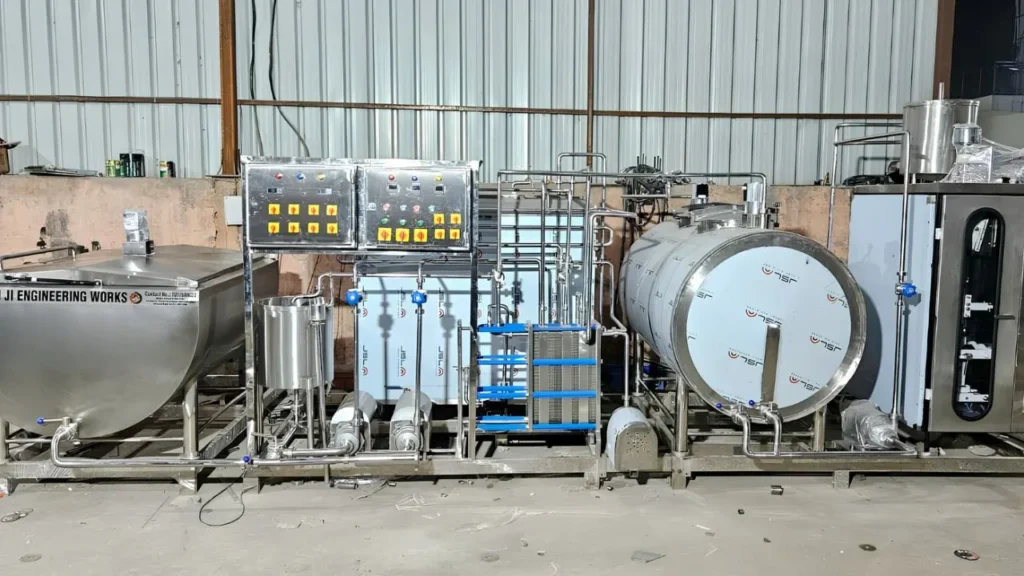
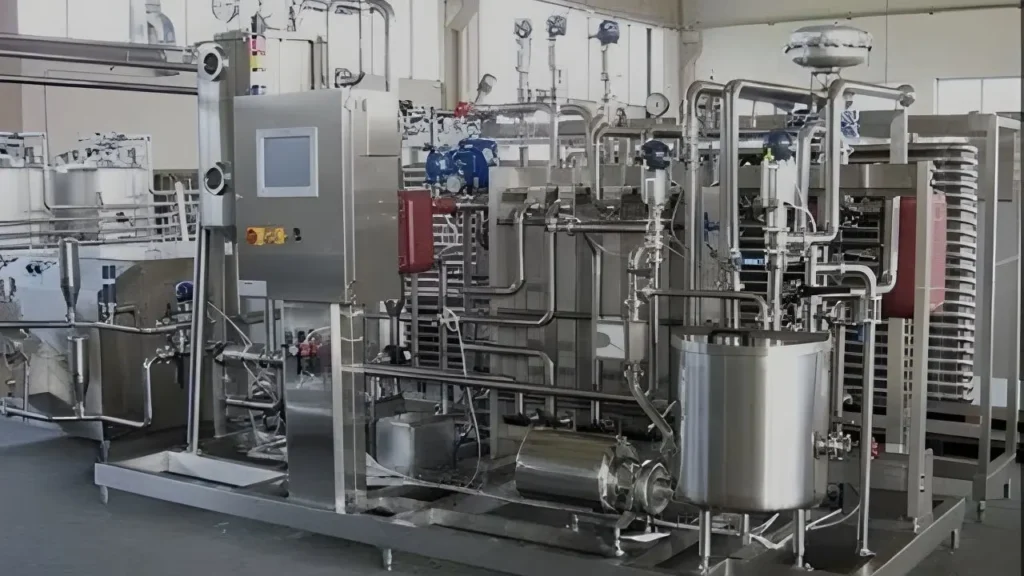
Pranam Ji Engineering Works is a trusted name in dairy equipment manufacturing, and understands this critical need. We provide Milk Chilling Plants and milk chilling solutions that help farmers and dairy cooperatives preserve milk quality from the very first stage. We ensure that milk remains fresh, safe, and ready for further processing. We maintain its freshness, flavor, and nutritional value largely depending on chilling of milk immediately after milking.
What is Chilled Milk?
Chilled milk refers to fresh milk that has been rapidly cooled to a temperature below 4°C (typically between 2°C and 4°C) immediately after milking. This process slows down bacterial growth and enzymatic activity, effectively extending the milk’s shelf life. The faster the milk is cooled, the better its quality and taste.
When milk is kept at ambient temperatures—especially in warm climates—bacteria can double every 20 minutes, causing quick deterioration. By chilling milk right at the collection source, this microbial growth is minimized, ensuring that the milk maintains its natural composition, flavor, and freshness until it reaches processing units or consumers.
Why Chilling of Milk is Important at the Source
The chilling of milk at the source—typically done at village collection points or milk chilling centers—plays a major role in maintaining the integrity of the dairy supply chain. Here’s why it matters so much:
- Prevents Bacterial Growth: Milk is an excellent medium for bacterial growth. Cooling it quickly to below 4°C stops harmful bacteria from multiplying and keeps the milk safe for consumption.
- Preserves Nutritional Quality: Fresh milk contains essential nutrients like proteins, calcium, vitamins, and enzymes. Immediate milk chilling prevents nutrient breakdown, keeping the milk wholesome and healthy.
- Maintains Taste and Freshness: Delayed chilling can cause souring, off-flavors, and undesirable odors. Chilling the milk immediately helps retain its natural taste and aroma.
- Reduces Spoilage Losses: Milk chilling centers reduce such losses by maintaining optimal conditions for storage and transport.
- Supports Efficient Processing: When milk reaches processing units at the right temperature, pasteurization and packaging become more efficient, reducing energy costs and improving final product quality.
The Role of Milk Chilling Centers
A milk chilling center acts as the first line of defense in the dairy value chain. It is where milk from various farmers is collected, cooled, and stored before being transported to processing plants. At a milk chilling center, fresh milk is received, tested for quality, and quickly cooled using a Milk Chilling Plant.
Pranam Ji Engineering Works offers complete milk chilling center solutions—from the design and installation of Milk Chilling Plants to maintenance and technical support. Our systems are designed to handle large volumes efficiently while ensuring minimal energy consumption and operational cost.
Also Read : Steam Boiler in Dairy Industry : Its Use and Important Factors in Milk Industry
Components of a Milk Chilling Plant
A Milk Chilling Plant typically includes:
- Bulk Milk Cooler (BMC): Used to rapidly chill milk to 4°C or lower.
- Refrigeration Unit: Maintains the cooling temperature continuously.
- Agitator: Keeps milk uniformly mixed to prevent cream separation.
- Control Panel: Monitors temperature and operational efficiency.
- CIP System (Cleaning-In-Place): Ensures hygiene and easy cleaning.
Pranam Ji Engineering Works designs each Milk Chilling Plant with advanced refrigeration technology and durable components, ensuring reliable performance even in challenging field conditions.
The chilling of milk at the source is a cornerstone of modern dairy operations. It prevents spoilage, maintains nutritional value, and ensures the highest quality for consumers. Without effective milk chilling, even the best raw milk can lose its value within hours.
Pranam Ji Engineering Works recognizes the importance of this process and continues to offer Milk Chilling Plants and milk chilling center solutions that empower dairy farmers and cooperatives. Our technology-driven approach ensures that every drop of milk retains its purity, taste, and nutritional goodness from farm to factory.